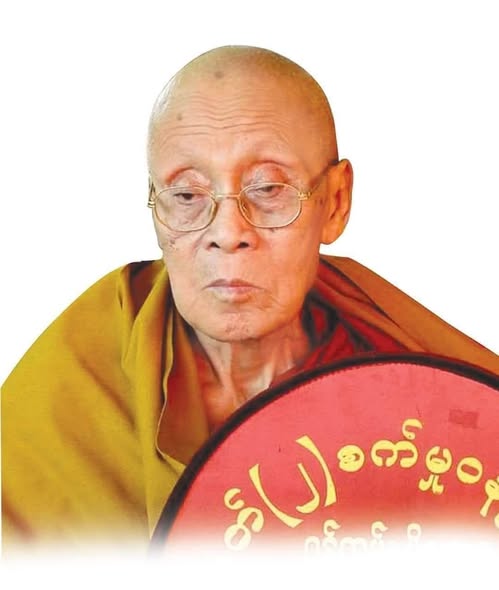
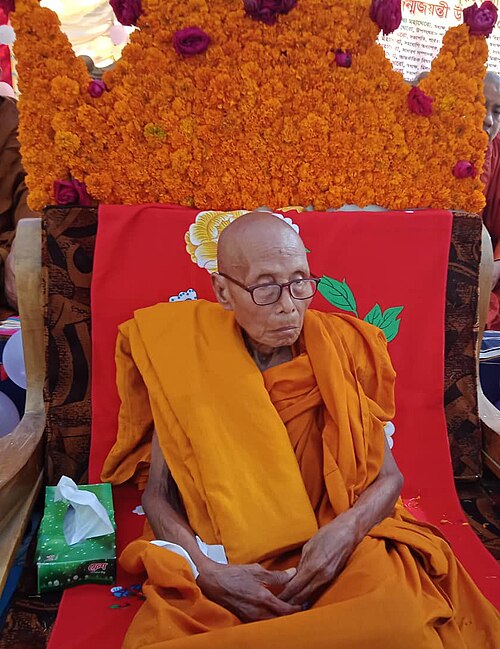
Sangharaj Sugata Priyo Mahathero is a revered name, a great ideal, and an exemplary historic figure—a devoted son of the Shakya lineage. He was one of the foremost monks who propagated Buddhism in the Chittagong Hill Tracts, a silent worker of social reform, and a compassionate guardian of the righteous Dharma. Guided by Theravada ideals, he carried the torch of righteousness to illuminate the blind, superstition-ridden society.
He undertook religious missions in remote, underdeveloped areas of the hill region, spreading the light of Dharma among people deprived of spiritual guidance. Through his tireless sacrifice, patience, hard work, and unbroken commitment to Dharma, many Buddhist educational institutions and monasteries were established in the region.
He was a recluse, a reformer, a scholar devoted to the propagation of righteous Dharma, a fearless follower of Theravada ideals living a disciplined life. Throughout his life, he quietly distributed the nectar of Dharma among uneducated people without seeking recognition at the national or international stage. In his personal life, he was hospitable, generous, compassionate, just, friendly, cheerful, and profoundly selfless, leaving his life enriched with unique moral character.
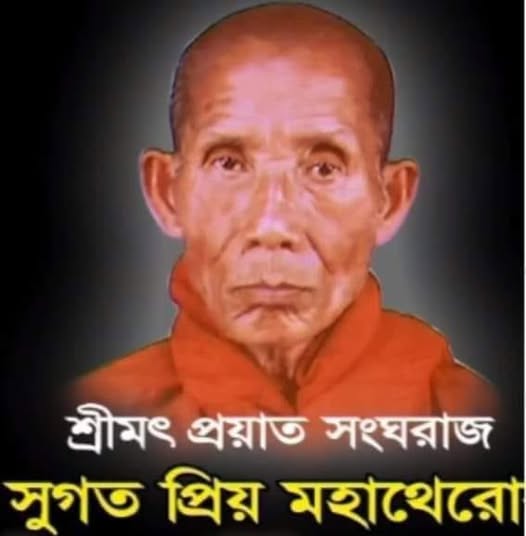
This brief attempt seeks to summarize the vast life and work of the venerable monk, a selfless luminary of the Buddhist monastic order.
(Late Sugata Priyo Mahathero, Honorable 2nd Sangharaj Pavisba)
Born: 1932, Died: 2010
Early Life
He was born in 1932 in a Buddhist family in Baradam, Rangamati Sadar Thana, in the then undivided Chittagong Hill Tracts. His birth name was Nanilal Chakma. His father was Yamini Ranjan Chakma and his mother Sumitra Devi Chakma. Nanilal was the youngest among siblings.
From childhood, he was healthy, strong, and intelligent, combining piety with intellect. Growing up in a loving and affluent family, he experienced a happy and comfortable childhood amidst the natural rural beauty of the region.
In 1960, the construction of the Kaptai Dam submerged around 600 sq km of land in the hill tracts, displacing most Buddhist villages. Nanilal completed his primary education before this event. Though he did not have access to higher modern education, he had a deep devotion to religious learning.
Family Life
Nanilal, as a responsible son of a well-off family, married Tuttori Chakma in 1950 in his village to fulfill his parents’ wishes. They had a child together. Unfortunately, both his wife and child died from a severe illness. Heartbroken, Nanilal became disinterested in family life and resolved to embrace monastic life, seeking a life devoted to spiritual pursuit.
Education and Monastic Training
Nanilal approached his parents for permission to enter monkhood. In 1953, at age 21, he was ordained as a novice monk under the headmaster of Rangamati Raj Vihar, Venerable Anand Mohon Mahathero. Upon ordination, he received the name Sugata Priyo. Under his teacher’s guidance, he diligently learned monastic rules, meditative practice, and scriptures, soon mastering the precepts and earning admiration for his dedication.
Upasampada (Higher Ordination)
In 1954, he received higher ordination (Upasampada) in a grand ceremony at Subalong Vihar, with the name Sugata Priyo Bhikkhu, and committed himself fully to the Buddha’s ideals. He continued rigorous study of the Tripitaka under the supervision of his teacher and later at Laksham Konok Chaitya Vihar, Comilla, in 1958, guided by the eminent scholar Pandit Jyotipal Mahathero.
By 1966, he had completed major Pali and Vinaya examinations with distinction. His profound understanding of Buddhist teachings and devotion to meditation earned him the trust of his teacher, who assigned him to teach and supervise novice monks.
Establishment of Baradam Dharmangkur Vihara
In 1966, a Buddhist monastery named Baradam Dharmangkur Vihara was established in the scenic and densely populated village of Baradam, Rangamati, primarily to serve the displaced villagers after Kaptai Dam’s construction. The first abbot was a monk named Mag, and in 1967, after nine years of study and training, Sugata Priyo returned to his village and became the abbot.
He began a lifelong mission of social reform and propagation of righteous Dharma. The Vihara became his center for spiritual practice, teaching, and social upliftment.
Role as a Social Reformer
Sugata Priyo Mahathero worked tirelessly to reform and educate the Buddhist communities of the Chittagong Hill Tracts, inhabited by 13 indigenous tribes including Chakma, Marma, Tanchangya, and Mro.
Before his efforts, many Buddhist communities had fallen into superstition, ritualism, and cultural decline due to centuries of external pressures. He advocated for the revival of true Theravada Buddhism, replacing animal sacrifices and deity worship with Dharma-compliant rituals, merit-making, and meditation practice.
He encouraged the formation of new monasteries, trained monks, and guided lay devotees in ethical, spiritual, and educational development. His efforts instilled knowledge of the Ten Wholesome Deeds (Dana, Sila, Bhavana, Seva, Respect, Dharma discourse, Listening to Dharma, Merit donation, Approval of merit, and Right observation), helping purify mind and society alike.
Creation of the Hill Monks’ Sangha
Through his leadership, the Hill Monks’ Sangha was organized, ensuring trained monks were sent to various remote villages to propagate Buddhism and inspire social reform. Religious festivals, meditation retreats, and community education were revived under his guidance. He created disciples, followers, and institutions that strengthened Buddhism across the Chittagong Hill Tracts.
Later Life and Legacy
Sugata Priyo Mahathero served the Chittagong Hill Tracts for decades, from 1967 until his passing in 2010, never seeking personal glory. He remained a symbol of ethical conduct, spiritual wisdom, and social reform. His life and teachings inspired generations, and the monasteries, disciples, and communities he nurtured continue his work today.