Birth:
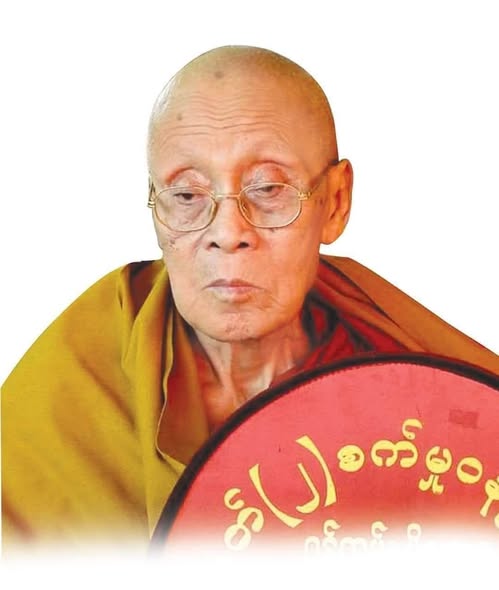
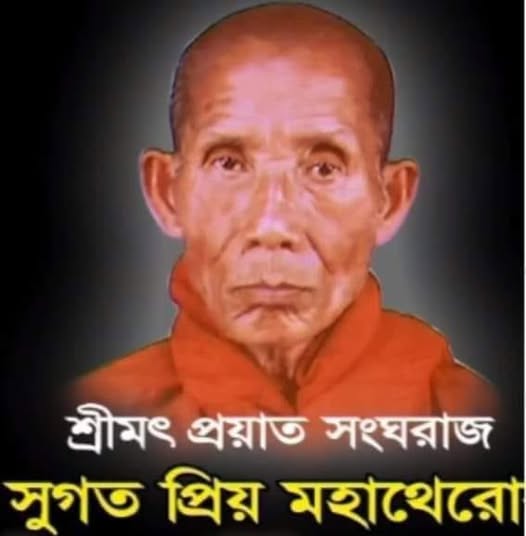
The Fourth Sangharaja, Venerable Tilokananda Mahathera, was born in 1937 in Subalang Betchari village under Barkal Upazila of Rangamati district. His lay name was Lakkhi Mohan Chakma. His father was Krishna Muni Chakma and his mother was Shingapudi Chakma. Among six siblings, he was the youngest.
Childhood and Education:
Lakkhi Mohan lost his mother within one year of his birth. He was then lovingly raised by his aunt, Sandhyabala Chakma, who nurtured him with great maternal affection. As he grew older, he enrolled in a local primary school, where his teacher was Kamini Barua. After completing his primary education, he went to Rajanagar Raj Vihara in Rangunia for higher studies. The abbot, Rajguru Venerable Dharmaratna Mahathera, admitted him to Rajanagar High School, where he studied up to the seventh grade. Alongside general education, he received instruction in the Tripitaka under his teacher.
Novitiate Life (Pravrajya):
With a natural inclination toward renunciation, he aspired to enter monastic life. In 1954, at the age of 17, in a solemn ceremony attended by family and relatives, he was ordained as a novice monk at Subalang Indrama Chhara village vihara under Venerable Prajnasara Mahathera. He was given the name “Sumanasara Sraman.” After several years of training in discipline and scriptures, he received full ordination (Upasampada) in 1959 under the preceptorship of Rajguru Aggabansha Mahathera, in the presence of many learned monks. At that time, he was given the name Bhikkhu Tilokananda.
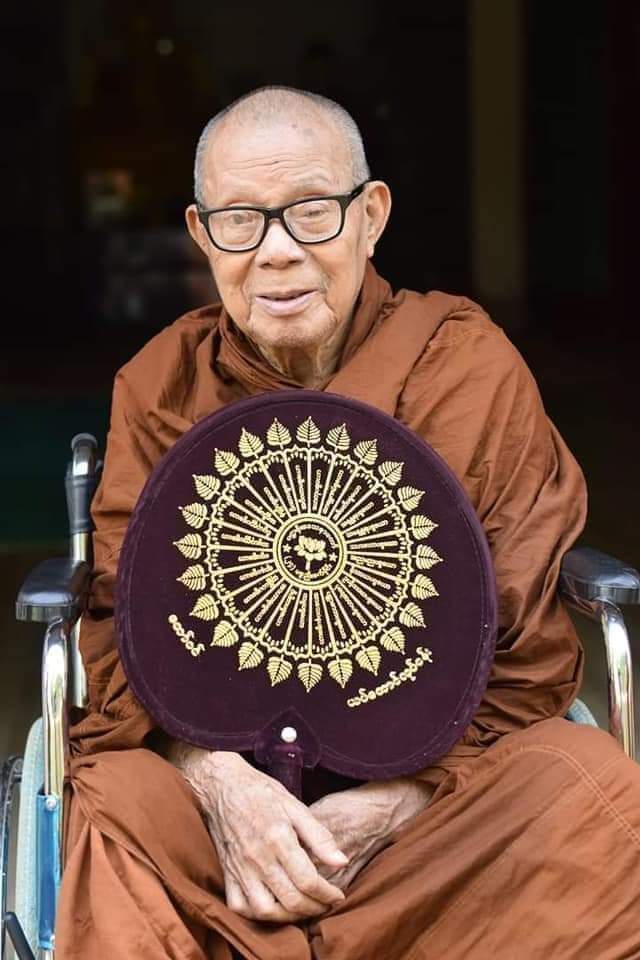
After some time, he moved to Rangamati Chakma Raj Vihara and spent five years under his teacher’s guidance studying the Tripitaka. In 1963, following his teacher’s instruction, he went to Ichamati Farangi Buddhist Vihara in Kaukhali to observe the rains retreat (Vassa). There, he renovated the dilapidated vihara with the help of devotees. Wherever he stayed, he contributed significantly to the development of those monasteries.
Service and Contributions:
In 1967, he was assigned as assistant abbot at Kamalchhari Amrakannan Buddhist Vihara in Khagrachari under Venerable Jnanajyoti Mahathera. There too, he inspired devotees and helped rebuild the monastery. He also initiated religious education for local children. During his stay, the villagers regarded him not only as a religious teacher but also as an ideal guide and guardian. Inspired by his efforts, Kamalchhari High School was established in 1970.
In 1972, he moved to Rupkari Maghban Shakyamuni Buddhist Vihara in Baghaichari, where he began providing both religious and general education to children. In 1978, he founded the “Kachalong Shishu Sadan,” which officially began operations in 1982 and was registered by the government in 1991. Due to the lack of land, the institution faced challenges in obtaining approval, but philanthropist Sarat Kumar Karbari donated 80 decimals of land for its establishment.
Venerable Tilokananda Mahathera was also skilled in craftsmanship. At a time when Buddha statues were scarce, he personally created and distributed them to various viharas. In addition to religious and educational work, he contributed to healthcare by establishing a clinic at his vihara in 1982.
Organizational Role:
As an organizer, he played a significant role in the formation of the Parbatya Bhikkhu Sangha, serving as General Secretary alongside President Venerable Aggabansha Mahathera.
Humanitarian Work and Philosophy:
A lifelong celibate monk, he was known for his compassion, friendliness, and humanitarian outlook. He embraced people of all religions—Muslim, Hindu, and Christian alike—and supported many underprivileged students with their education.
Initially devoted to meditation, he later realized that personal spiritual attainment alone was not enough. He believed that true purpose lies in serving society and eliminating ignorance through education. With this vision, he transitioned from a purely meditative life to becoming a social reformer. Even while engaged in social work, he emphasized strict adherence to religious discipline, ensuring that students in his care practiced morality, recited scriptures, and engaged in meditation.
He also played a vital role in women’s empowerment by providing shelter and educational opportunities to many disadvantaged girls. His generosity enabled numerous women to pursue higher education.
Recognition and Honors:
Throughout his life, he received many honors and was deeply revered by countless devotees. In recognition of his character and contributions, he was awarded the title “Sada Moner Manush” (Man of Pure Heart) by ATN Bangla and Unilever Bangladesh in 2007. He was elected Upasangharaja in 2010 and later became the Fourth Sangharaja in 2019, succeeding the Third Sangharaja Venerable Abhayatissa Mahathera. In 2023, he was honored by the Government of Myanmar with the title “Aggamahapandita.”
He visited India twice (1993 and 2014) to pay homage to sacred Buddhist sites. In 2018, he visited Thailand at the invitation of the Thai Rajguru to discuss higher religious education for members of the Parbatya Bhikkhu Sangha. In 2016, he traveled to Sri Lanka with Venerable Sumanalankara Mahathera to attend an international conference.
Passing Away (Mahaparinirvana):
After a distinguished and dedicated life, spreading the light of wisdom across the Chittagong Hill Tracts and beyond, this great figure—Aggamahapandita, the compassionate “Man of Pure Heart,” and the Fourth Sangharaja Venerable Tilokananda Mahathera—passed away on Thursday, November 2, 2023, at the age of 86 and after 63 vassa.
“All conditioned things are impermanent; they arise and pass away.”