Birth:
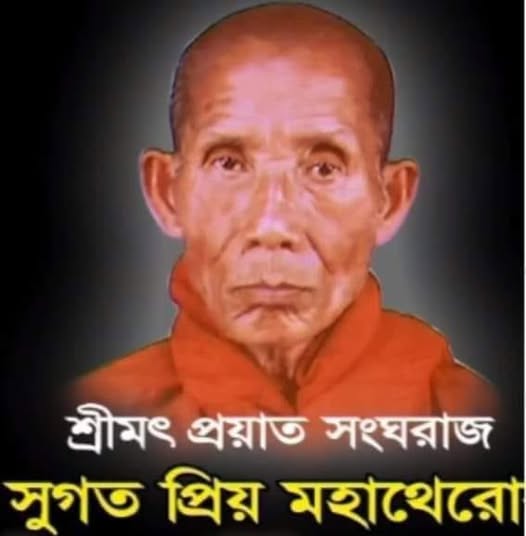
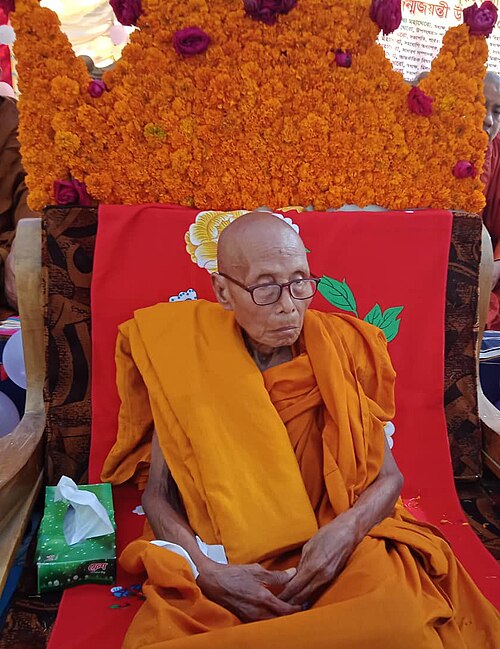
The First Sangharaja Rajguru Aggravamsa Mahathera was born on November 23, 1913, in the picturesque village of Kutubdia, surrounded by green hills in Bilaichari Thana of the then Chittagong Hill Tracts district. His lay name was Phulnath Tanchangya. His father, Rudra Sing Tanchangya, was a distinguished landlord and Karbari, and his mother was the virtuous Ichchhabati Tanchangya. Among six siblings, he was the youngest.
Education:
At that time, there were limited opportunities for modern education in the Chittagong Hill Tracts. He began his early education under his father and later completed primary schooling under Indramuni Master. Due to the lack of higher educational institutions in the area, he had to discontinue formal studies despite his strong interest in learning.
Householder Life:
Later, at the earnest request of his parents, he entered family life. He had one son and one daughter. Although a householder, he remained detached and contemplative by nature, dedicating much of his time to social and religious activities. Eventually, he made a firm decision to renounce worldly life and embrace monasticism. His wife supported his decision without objection.
Novitiate Life (Pravrajya):
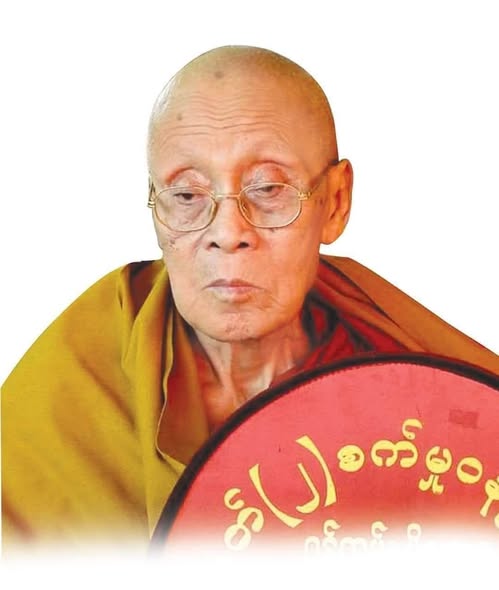
With his parents’ consent, he was ordained as a novice monk on the auspicious full moon day of Baishakh in 1936 under the guidance of Venerable U Tissa Mahasthavira, then abbot of Raikhyang Bogaltali Vihara. He was given the name “Aggavamsa Sraman.” Under his teacher’s care, he mastered discipline and monastic practices, becoming a dedicated disciple. He showed deep interest in the Tripitaka and Buddhist teachings, and later studied under Pandit Dharmananda Mahasthavira at Ichamati Dhatuchaitya Vihara in Rangunia, successfully passing preliminary, intermediate, and advanced examinations. It is also said that he passed his SSC from Rangunia Ideal High School.
Higher Ordination (Upasampada):
After attaining proficiency in Buddhist scriptures and discipline, he received full ordination in 1939 on the full moon day of Baishakh under U Tissa Mahasthavira. He then became Bhikkhu Aggravamsa. After some time with his teacher, he returned to Chittagong and stayed at the historic Bagowan Faraching Vihara under Venerable Anandamitra Mahasthavira, where he continued his studies and meditation. Later, he practiced deep forest meditation for two years near his birthplace.
Higher Studies in Myanmar (Burma):
In 1948, he traveled to Myanmar for higher education. There, he devoted himself to meditation and Tripitaka studies under the renowned meditation master Aggamahapandita U Sobhana Mahasthavira (Mahasi Sayadaw). He gained expertise in Pali and Buddhist scriptures during his stay.
Participation in the Sixth Buddhist Council:
From 1954 to 1956, he participated in the Sixth Buddhist Council held in Yangon, Myanmar, marking the 2500th Buddha Jayanti. He represented the Chittagong Hill Tracts of then East Pakistan. Recognizing his scholarship, the Buddha Sasana Council of Myanmar conferred upon him the title “Aggamahapandita.”
Return to Homeland and Rajguru Appointment:
During the council, he met Chakma King Tridev Roy, who invited him to return and assume the position of Rajguru. After ten years in Myanmar, he returned home in December 1957 and was formally appointed Rajguru on January 5, 1958. He founded the “Parbatya Chattal Bhikkhu Samiti” (later renamed “Parbatya Bhikkhu Sangha Bangladesh”) and also established the “Parbatya Chattal Buddhist Association.”
Elevation to Mahasthavira:
In 1965, upon completing 26 vassa (rain retreats), he was honored with the title “Mahasthavira” in a royal ceremony. The first international conference in the Chittagong Hill Tracts was also held during this time.
He also played a key role in inspiring the higher ordination of Rathiendra Sraman (Sadhananda Mahasthavira, known as Banbhante) in 1969 and served as the officiating preceptor.
Visit to India:
In 1977, he traveled to India and stayed for a long time at Dharmankur Vihara in Kolkata. Later, he co-founded the “Bodhicariya Shishu Karuna Sangha” in Chakpachuria, North 24 Parganas, with Venerable Bimalatissa Mahathera and served as its president until 2001. He also visited countries such as Japan, the United Kingdom, Russia, France, and Switzerland, participating in international conferences and representing his people.
Return to Bangladesh:
After 24 years in India, he returned home in 2001. He initially stayed at Ananda Vihara and later, at the invitation of King Devashish Roy, resumed his role as Rajguru and abbot at Chakma Rajbihara until his passing.
Titles and Honors:
- March 13, 2003: Conferred the title “Mahasanghanayaka” by Parbatya Bhikkhu Sangha
- April 22, 2005: Awarded “Aggamahasaddhammajotikadhaja” by the Government of Myanmar
- December 2008: Posthumously recognized as the First Sangharaja by Parbatya Bhikkhu Sangha
Literary Contributions:
He authored around 25 books, of which about 11 were published, including:
- Samabay Buddhopasana (1958)
- Buddhist Almanac (1961)
- Buddha Upasana (Lokottara Division) (1982)
- Buddha Upasana (Loka Division) (1984)
- Chakma Gitendi Mangalsutra (1972)
- Parinam Natak
- Sraman Kartabya (1977)
- The Stop Genocide in Chittagong Hill Tracts of Bangladesh
- Manab Dharma Panchashila
- Buddha Samantika (2008)
- Buddha Tabana (Poetry) (2018)
Passing Away (Mahaparinirvana):
This মহান monk, known for his renunciation, humanitarian values, and devotion to the Dhamma, passed away at the age of 95 and after 69 vassa on January 5, 2008, at 9:30 PM at Rangamati General Hospital due to old age.
“All conditioned things are impermanent; they arise and pass away.”