Long ago, in the depths of a peaceful forest by the banks of the Ganges, there lived a golden deer unlike any other. Its fur shone like polished gold, and its eyes radiated wisdom and gentleness. This was no ordinary creature—it was the Bodhisattva, the Buddha in one of his previous lives, born as a deer to exemplify compassion and virtue.
This golden deer lived a quiet life in the forest, far from human settlements, accompanied only by the rustle of leaves and the songs of birds. One night, as the moonlight cast its silver reflection on the flowing river, the golden deer heard cries for help. A man was drowning in the Ganges, swept away by the swift current. Without hesitation, the deer leapt into the water. With strong strokes and unwavering resolve, it reached the man and gently pulled him to safety.
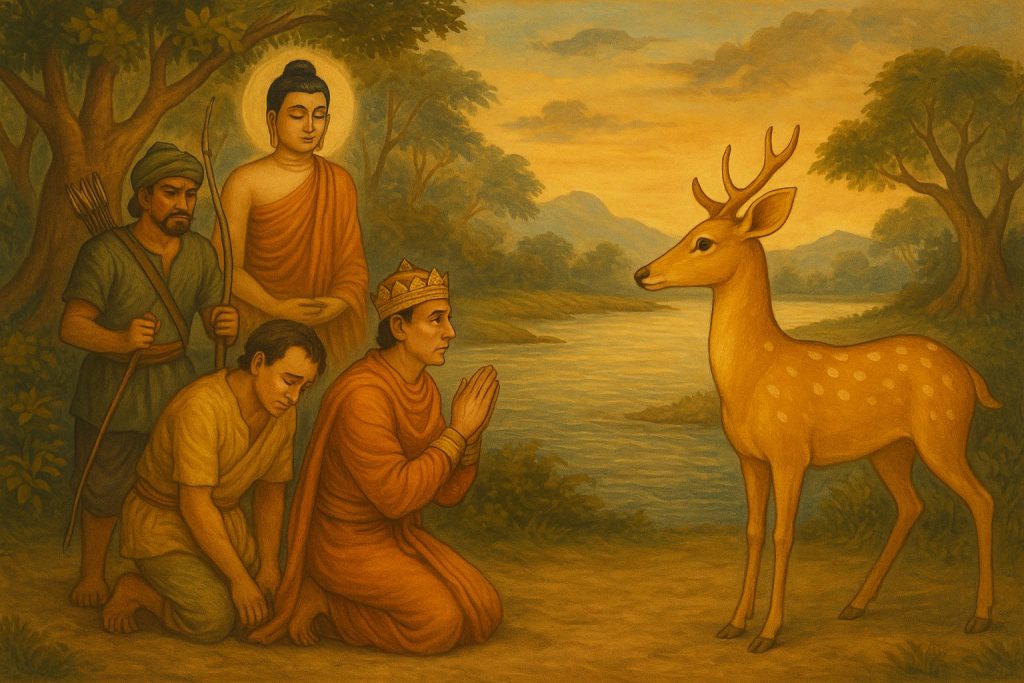
Exhausted and trembling, the man knelt before the golden deer and expressed his gratitude. “You saved my life, noble creature. I owe you everything.” The golden deer looked kindly at him and replied, “Then honor your debt not by words, but by silence. Please, do not tell anyone of my presence here. If others find me, their greed may cost me my life.” The man nodded solemnly and promised to keep the deer’s existence a secret.
Time passed. News soon spread in the nearby kingdom that the queen had dreamt of a magnificent golden deer, a creature so beautiful that she longed to see it in real life. The king, enchanted by her vision, announced a grand reward to anyone who could find and bring him such a deer. Tempted by the riches, the man who had once been saved by the golden deer betrayed his promise. He went to the palace and told the king about the forest and the golden creature that lived within it.
Guided by the man, the king’s hunters entered the forest. When the golden deer saw them approaching with weapons, it did not flee. Calm and composed, it stood its ground. As the hunters prepared to strike, the deer spoke, its voice clear and gentle, “Why do you seek to kill me? I have done no harm. I have saved life, not taken it.”
Surprised and moved by the deer’s words, the king stepped forward. “Is it true that you saved this man’s life?” he asked. The golden deer nodded. The king turned to the man and questioned him. The man, overcome with shame, confessed his betrayal. The king, deeply impressed by the deer’s nobility and the man’s disgrace, bowed before the golden creature.
“O noble being,” said the king, “you have taught us the meaning of compassion, truth, and forgiveness. You shall not be harmed. In fact, from this day forward, this forest shall be your sanctuary, and all beings will be ordered to protect you.” The golden deer, grateful but humble, thanked the king and returned to the heart of the forest.
From that day on, the golden deer lived in peace, and the king often shared the story of the deer’s compassion and the man’s betrayal as a lesson to his people: that even in a world full of desire and deceit, virtue and kindness shine brightest.
Moral of the Story:
True nobility lies in compassion, selflessness, and forgiveness. Even when betrayed, those who act with virtue and courage inspire change in others and leave a lasting mark of goodness in the world.